
 Alex
Alex Navigating the Complexities of Fabric Durability with the Martindale Tester
The durability of a textile is perhaps its most important functional attribute. Whether it is used for high-fashion garments, industrial workwear, or luxury upholstery, a fabric must be able to maintain its integrity under constant friction. In the laboratory, this resistance is measured using the Martindale Tester, a versatile and globally recognized instrument. Often referred to as a Fabric Abrasion Tester, this machine provides the empirical evidence needed to substantiate claims of durability and performance in the competitive textile market.
The Engineering Behind the Martindale Tester
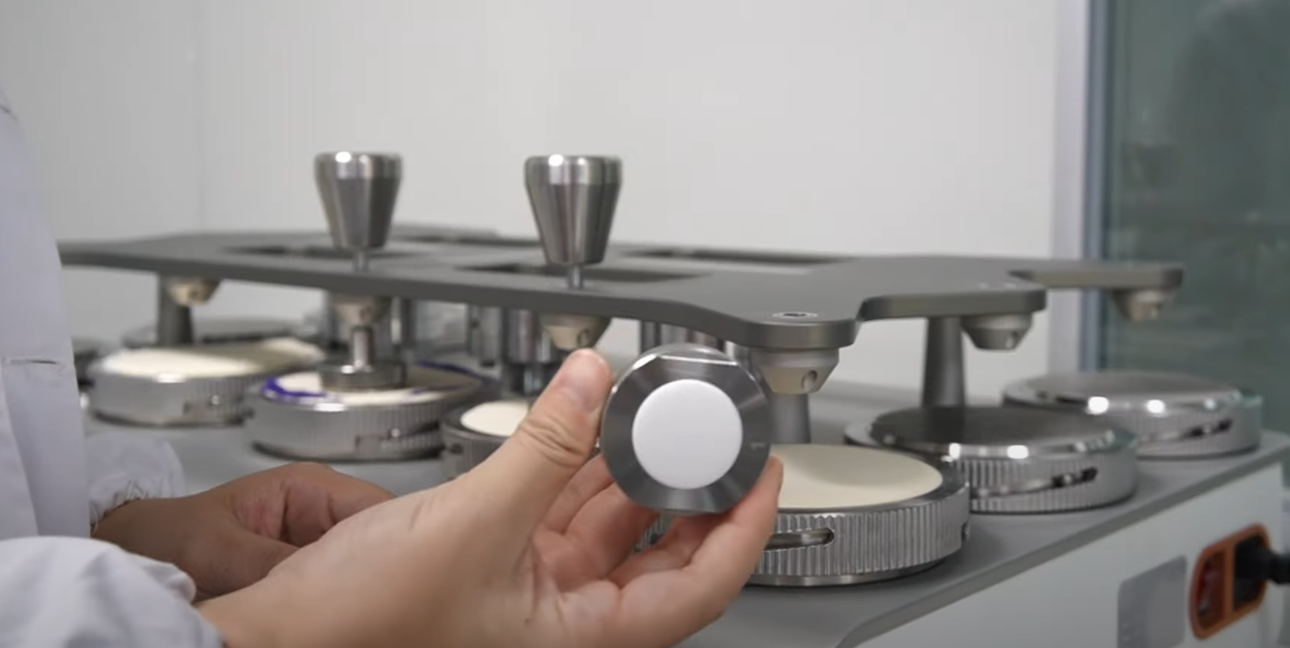
The Martindale Tester was originally developed to simulate the multi-directional wear that occurs during the use of a garment. Traditional friction tests often used a linear “reciprocating” motion, which failed to account for the way humans actually move. When we sit in a chair or walk in a coat, the friction is rarely in a straight line. The Martindale Tester solves this problem by using a Lissajous motion. This complex geometric pattern ensures that the specimen is rubbed from every possible angle, creating a realistic simulation of long-term wear in a fraction of the time.
As a Fabric Abrasion Tester, the machine is highly customizable. Technicians can adjust the pressure applied to the fabric by using different weights, typically 9kPa for apparel and 12kPa for furniture. The choice of abradant is also standardized; usually, a cross-bred worsted wool fabric is used to ensure that results are consistent across different laboratories worldwide. This standardization is critical for international trade, as it allows a buyer in Europe to trust the durability ratings provided by a manufacturer in Asia.
Operational Excellence in Fabric Abrasion Testing
Using a Fabric Abrasion Tester effectively requires strict adherence to environmental and procedural standards. Before any test begins, samples must be conditioned in a controlled environment (20°C and 65% relative humidity) for at least 24 hours. This is because the moisture content in fibers can significantly alter their strength and friction coefficient. Once conditioned, the samples are cut with a precision die to ensure they are exactly the right size for the specimen holders.
During the test, the Martindale Tester runs for thousands of cycles. For high-performance fabrics, a test might last for over 100,000 rubs, which can take several days of continuous operation. Throughout this process, the technician must periodically stop the machine to inspect the samples for thread breakage. The “end point” of the test is reached when two or more threads in a woven fabric break, or when a hole appears in a knitted material. This cycle count is then recorded as the official abrasion rating. Modern versions of the Fabric Abrasion Tester include “smart” sensors that can automatically stop the machine when a thread break is detected, further increasing the accuracy of the result.
Enhancing Productivity with Modern Design
The latest generation of the Martindale Tester has been redesigned with the user in mind. Traditionally, loading samples and changing the abradant was a labor-intensive process that required lifting heavy guide plates. However, machines like the ChiuVention Smartindale feature an ergonomic design that allows the guide plate to be lifted with one hand. This “flip-top” accessibility makes it much easier to inspect samples and maintain the machine between tests.
Furthermore, the Smartindale is a multi-purpose unit. While it is primarily used as a Fabric Abrasion Tester, it can be quickly converted to a pilling tester by changing the specimen holders and adjusting the stroke length. This “two-in-one” capability is essential for modern laboratories that need to maximize their floor space. By using a single Martindale Tester for both functions, labs can reduce their capital expenditure while maintaining a full range of testing capabilities.
Data Integration and Industry 4.0
We are currently in the era of Industry 4.0, where digital connectivity is transforming manufacturing. The Martindale Tester is no exception. Modern machines are now equipped with Wi-Fi and integrated software that allows for digital data logging. Instead of manually counting cycles and writing down results, the Fabric Abrasion Tester can automatically generate a comprehensive test report that includes the date, time, cycle count, and even photos of the failed specimen.
This digital transparency is a game-changer for quality assurance. It allows brands to track the performance of their suppliers over time and identify potential quality issues before they lead to bulk rejections. For the consumer, a “Martindale Rub Count” on a product label is a promise of longevity. By using the most advanced Martindale Tester technology available, manufacturers can fulfill that promise, delivering high-quality, durable textiles that meet the demands of the modern world.
0 Comment